 Free download, track your collection

How to Start Collecting Pokémon Cards: A Beginner's Guide
By TCG Vault Team · · · 7 min read
Written by the team that builds TCG Vault — how we research these guides.
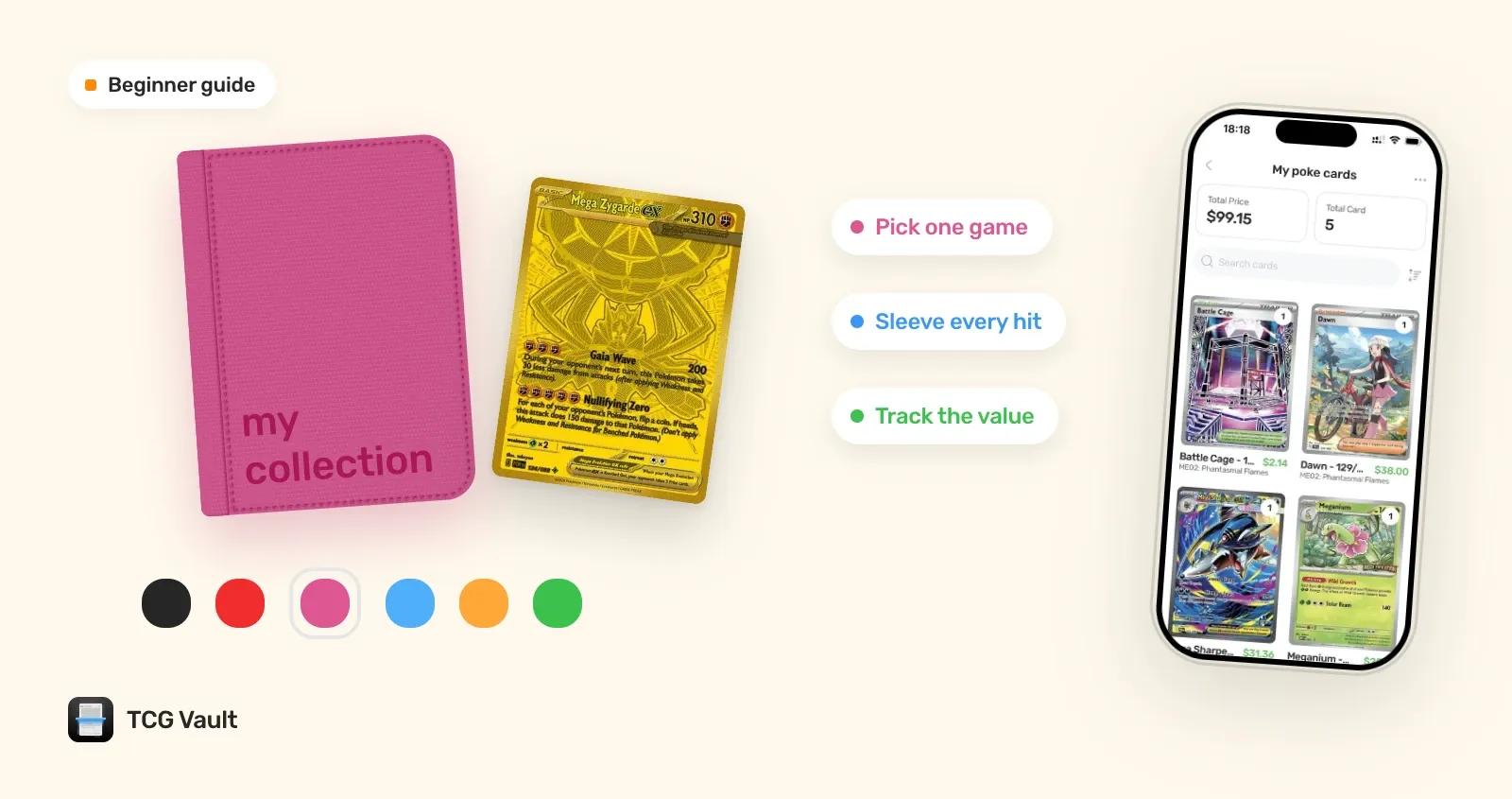
Figuring out how to start collecting Pokémon cards is mostly about avoiding a few expensive beginner mistakes. The hobby is enormous: The Pokémon Company says it had produced more than 85 billion cards by the end of March 2026. The collectors who enjoy it most pick a direction early instead of buying everything in sight.
This guide walks through the choices that matter in your first few months, with real prices from the TCG Vault database of English cards (TCGplayer market prices for Near Mint copies, checked September 19, 2026).
How to start collecting Pokémon cards: choose a goal
Start with a goal, even a loose one. A goal tells you which cards to buy, which to trade away and when you’re done. These are the most common starting points:
- A favorite Pokémon. Every Pikachu, every Eeveelution, every card of the Pokémon you grew up with. It’s personal and you can go at your own pace.
- One set. Collect every numbered card in a single expansion. It’s the classic binder project, and a current set is the cheapest place to start.
- A master set. Every version of every card in a set, reverse holos and special patterns included. That’s a much bigger job: Prismatic Evolutions has 180 numbered cards, but our database, built from TCGplayer’s catalog, holds 449 distinct versions of them.
- The art. Illustration Rares and Special Illustration Rares are full-scene artwork cards, and some collectors follow favorite illustrators across sets.
- Vintage. Cards from the 1999–2003 Wizards of the Coast era. Exciting, but pricier, and condition and fakes matter far more.
- Playing. If you want to play the game, build a deck first and collect around it.
You can change your goal later. The point is to have one on the day you walk into a store.
Should you buy Pokémon packs or singles?
Buy packs for the fun of opening them. Buy singles for the cards you actually want. That one habit will save you more money than anything else in this guide.
Here’s why. Every booster pack contains 10 cards, 1 Basic Energy and 1 Pokémon TCG Live code card, according to the official Pokémon TCG product pages. Most of those cards are commons and uncommons, and they’re worth cents. Across the 22 Scarlet & Violet and Mega Evolution sets released between March 2023 and July 2026, 78.7% of card versions in our database sell for under $1. The median plain common is $0.13.
The cards people chase are few. In Perfect Order, for example, only 6 Special Illustration Rares and 1 Mega Hyper Rare sit among 124 numbered cards. You can open a lot of packs without seeing one.
As singles, those same cards have a known price:
| Card (set) | Rarity | Market price, Sep 19, 2026 |
|---|---|---|
| Charmander 168/165 (Scarlet & Violet 151) | Illustration Rare | $94.56 |
| Pikachu 173/165 (Scarlet & Violet 151) | Illustration Rare | $82.40 |
| Typical Illustration Rare, SV and ME sets | Illustration Rare (median) | $12.16 |
| Typical Special Illustration Rare, SV and ME sets | Special Illustration Rare (median) | $34.88 |
If a specific card is your goal, buying it outright is almost always cheaper than trying to pull it. Open packs as entertainment, with money you’re happy to spend on entertainment.
Which Pokémon products should a beginner buy?
If you do want sealed product, it helps to know what’s inside each box. These contents come from the official Pokémon TCG pages for the 2026 Mega Evolution sets:
| Product | What’s inside | Good for |
|---|---|---|
| Booster pack | 10 cards, 1 Basic Energy, 1 code card | Trying a new set |
| Booster bundle | 6 booster packs | A small opening session |
| Elite Trainer Box | 9 booster packs, a promo card, 65 sleeves, 40 Energy cards, dice, a coin and a storage box with dividers | A first “starter kit” with supplies |
| Pokémon Center Elite Trainer Box | 11 booster packs plus an extra Pokémon Center promo | Buyers who can get one from Pokémon Center |
| Booster display | 36 booster packs | Opening a whole box with friends |
| Singles | One exact card | Finishing a set or a favorite-Pokémon binder |
An Elite Trainer Box makes a good first purchase because the sleeves and storage box stay useful long after the packs are gone.
Where should you buy Pokémon cards?
For sealed product, stick to sources you trust: the official Pokémon Center store, big retailers and your local game store. Popular releases sell out fast. The Pokémon Company has said it is printing at maximum capacity to meet very high demand, and Pokémon Center uses a virtual queue for certain products when traffic spikes.
For singles, the usual options are the TCGplayer marketplace, local game stores and card shows. For expensive singles on eBay, look for listings covered by eBay’s Authenticity Guarantee, which sends eligible cards priced at $200 or more to PSA for inspection before they reach you.
Be wary of sealed product or big-name cards priced far below everyone else, and check any card that looks too cheap before you pay. Our guide on how to tell if Pokémon cards are fake covers the checks worth doing.
How do you tell what condition a card is in?
Condition decides price, so learn the vocabulary before you buy singles. TCGplayer lists cards as Near Mint, Lightly Played, Moderately Played, Heavily Played or Damaged. Near Mint means minimal wear: crisp corners, clean edges and a nearly unmarked surface, with at most a few slight flaws.
When you look at a card, check four things:
- Corners. Any rounding or white showing through?
- Edges. Look for whitening or chipping, especially on the back.
- Surface. Tilt it under a light to catch scratches, dents and print lines.
- Centering. Are the borders even left to right and top to bottom? PSA sets a centering limit for every grade, so uneven borders can cap a card’s grade on their own.
Graded cards use a different, 10-point scale. If you’re curious how a card goes from “Near Mint” to “PSA 10”, read the PSA grading scale explained.
How do you protect Pokémon cards from day one?
Damage is permanent, so protect cards as soon as they leave the pack:
- Penny sleeves for every card you want to keep. They’re cheap and stop scratches.
- Top loaders or semi-rigid holders for anything valuable. PSA’s own submission guide asks for a penny sleeve inside a semi-rigid holder, so it’s a good habit for cards you might grade one day.
- A binder with side-loading pockets for set and favorite-Pokémon collections, so cards can’t slide out.
- A cool, dry, dark place for storage. Heat, humidity and direct sunlight warp and fade cards.
Skip rubber bands, loose shoeboxes and pockets. Those are the fastest way to turn a Near Mint card into a played one.
How do you keep track of your collection?
Knowing what you own stops you from buying duplicates and tells you when a trade is fair. A spreadsheet works, but it’s slow and the prices go stale.
TCG Vault does the tracking with your iPhone camera. Point it at a card and it identifies the name, set, number and rarity, then shows the current market price from TCGplayer data refreshed daily. Add cards to a collection and it keeps a running total value, in any of 30+ currencies. The app is free to download; a premium subscription adds unlimited scanning, 1-, 3- and 6-month price history charts, multiple collections and marketplace links. Camera images aren’t stored.
If you just want a quick price, the Pokémon card value checker looks up a card from your browser. And if you’re choosing between apps, see how our Pokémon card scanner works.
Beginner mistakes to avoid
These habits are the easiest way to waste money early on:
- Chasing one card through packs. Decide in advance how many packs you’ll open, then buy the single.
- Paying big resale markups on sealed product. The Pokémon Company says it reprints products that sell out to restock retailers, so it can pay to wait.
- Pricing from listings instead of sales. Asking prices can be anything. TCGplayer’s market price is built from recent completed sales, which is a better guide.
- Trading without checking prices. Look both cards up first, every time.
- Leaving cards unsleeved “for now”. Now is when the damage happens.
Start small, pick a goal, and let the collection grow at a pace you enjoy. That’s the whole secret.
Frequently asked questions
How much money do you need to start collecting Pokémon cards?

There's no minimum. Most modern cards sell for well under a dollar, so even a small monthly budget spent on singles goes a long way. Decide the number before you shop, not at the register.
Should I start with old or new Pokémon cards?
Most beginners start with current sets because they're still in print, easy to find and cheap to complete. Vintage cards cost more and demand more care with condition and fakes, so many collectors add them later.
What is a master set?
A master set is every version of every card in a set, including each reverse holo and special pattern version. It's always much bigger than the set number printed on the cards.
Should I keep my packs sealed or open them?
Open them if you collect for fun. Keeping product sealed only makes sense if you plan to hold or resell it, and there's no guarantee sealed product goes up in value.
Is it OK to collect Japanese Pokémon cards?
Yes, Japanese cards are official products too. Collect the language you can buy, sell and trade easily where you live; mixing languages makes a collection harder to price.
How do I know if a card I own is valuable?
Check the set symbol, collector number and whether it's holo or reverse holo, then look up its current market price. Scanning it with TCG Vault shows the TCGplayer market price in a few seconds.
Keep reading
-
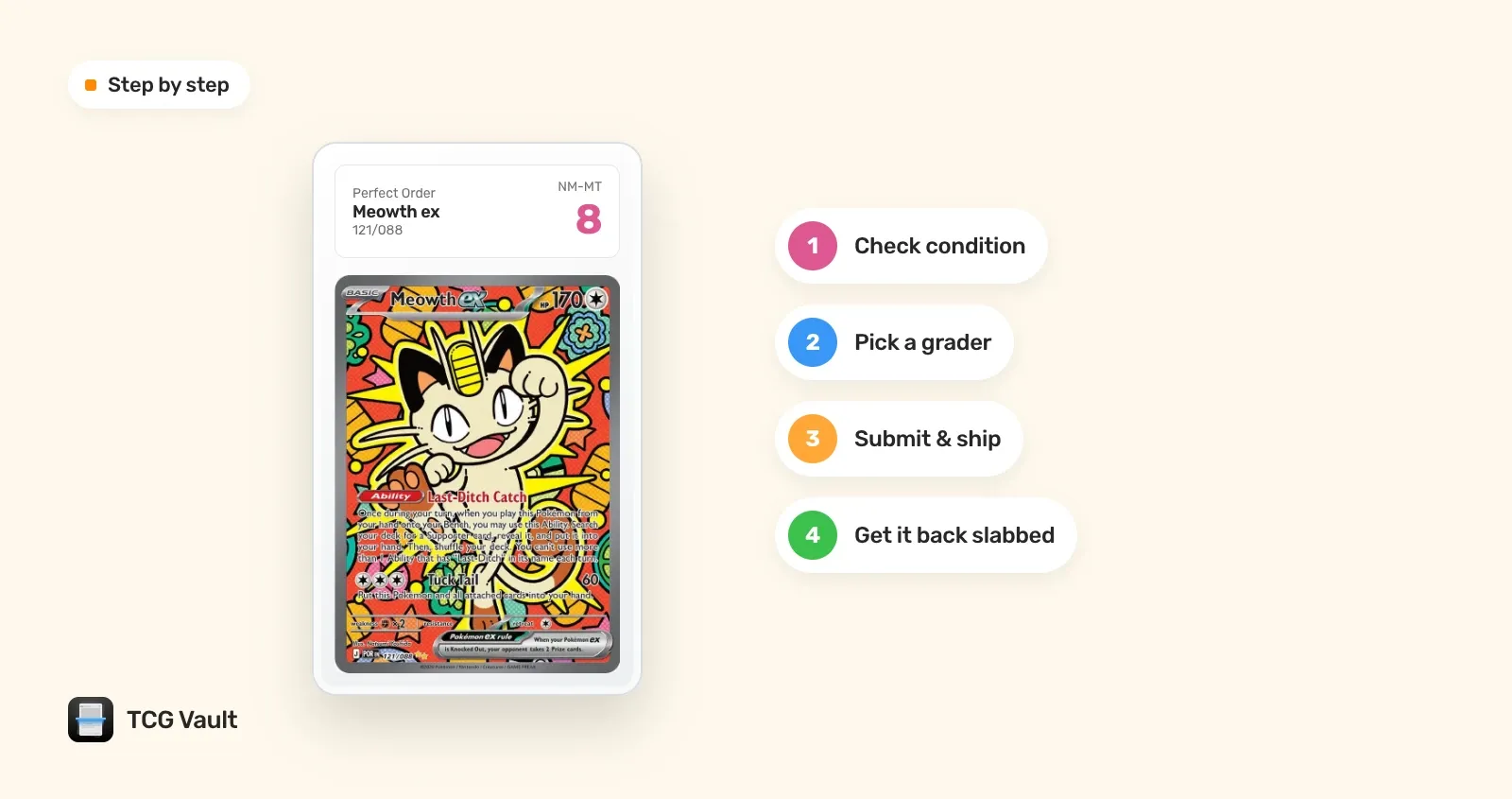
How to Grade Pokémon Cards: A Step-by-Step Guide (2026)
How to get Pokémon cards graded: choose PSA, CGC, Beckett or TAG, check condition, pick a tier by value, then pack and ship. Prices as of September 2026.
-
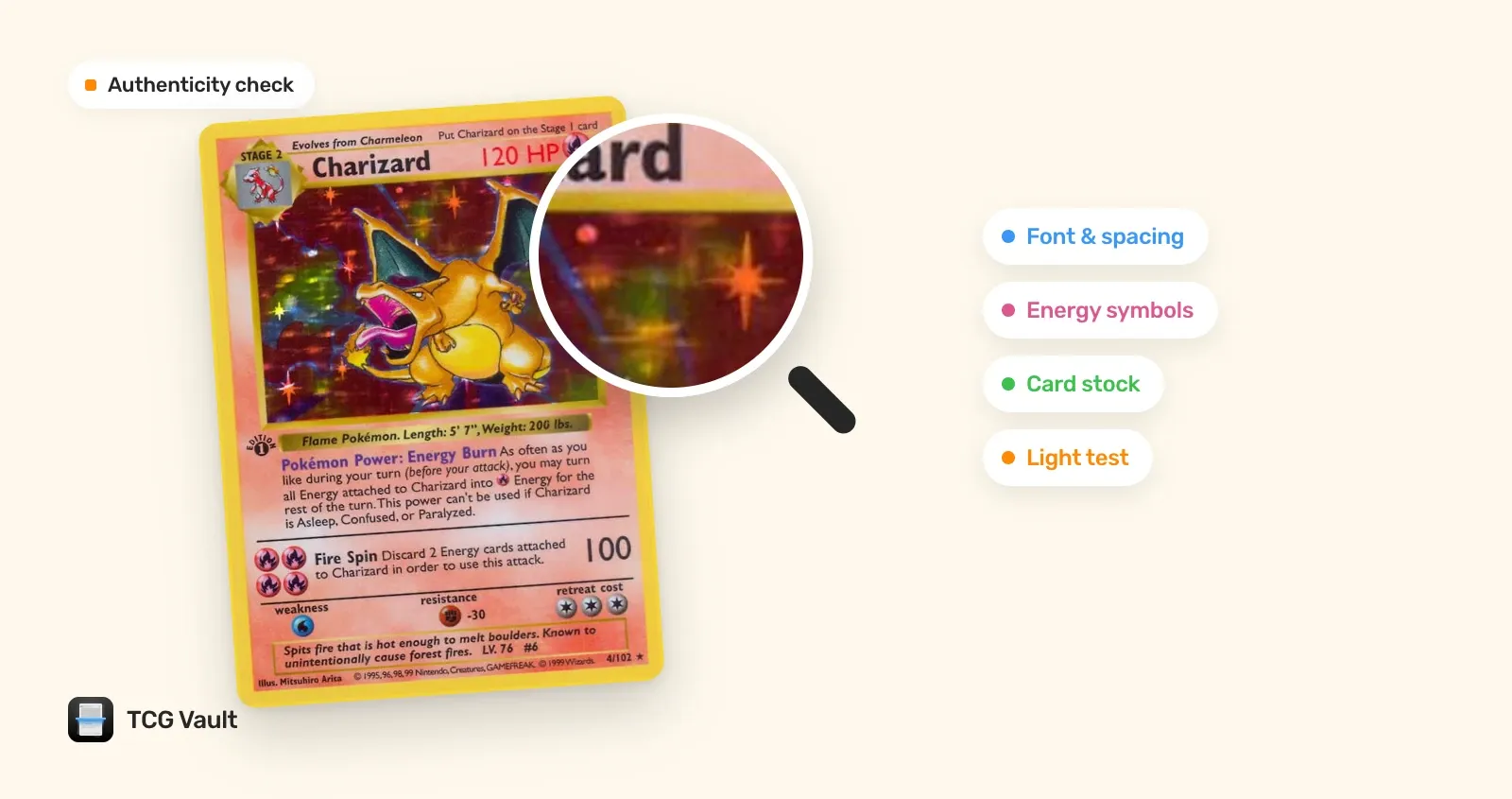
How to Tell If Pokémon Cards Are Fake: 10 Checks That Work
How to tell if Pokémon cards are fake: check the text, energy symbols, card back, holo, feel, size and set number, then the light test. Checklist inside.
Collectors rate us 4.6


See what your cards are really worth.
Scan a card with your iPhone and TCG Vault shows its market price in seconds — then keeps your whole collection’s value up to date.
 Download on iOS