

Why Are Pokémon Cards So Expensive? 7 Reasons, With Real Prices
By TCG Vault Team · · 7 min read
Written by the team that builds TCG Vault — how we research these guides.
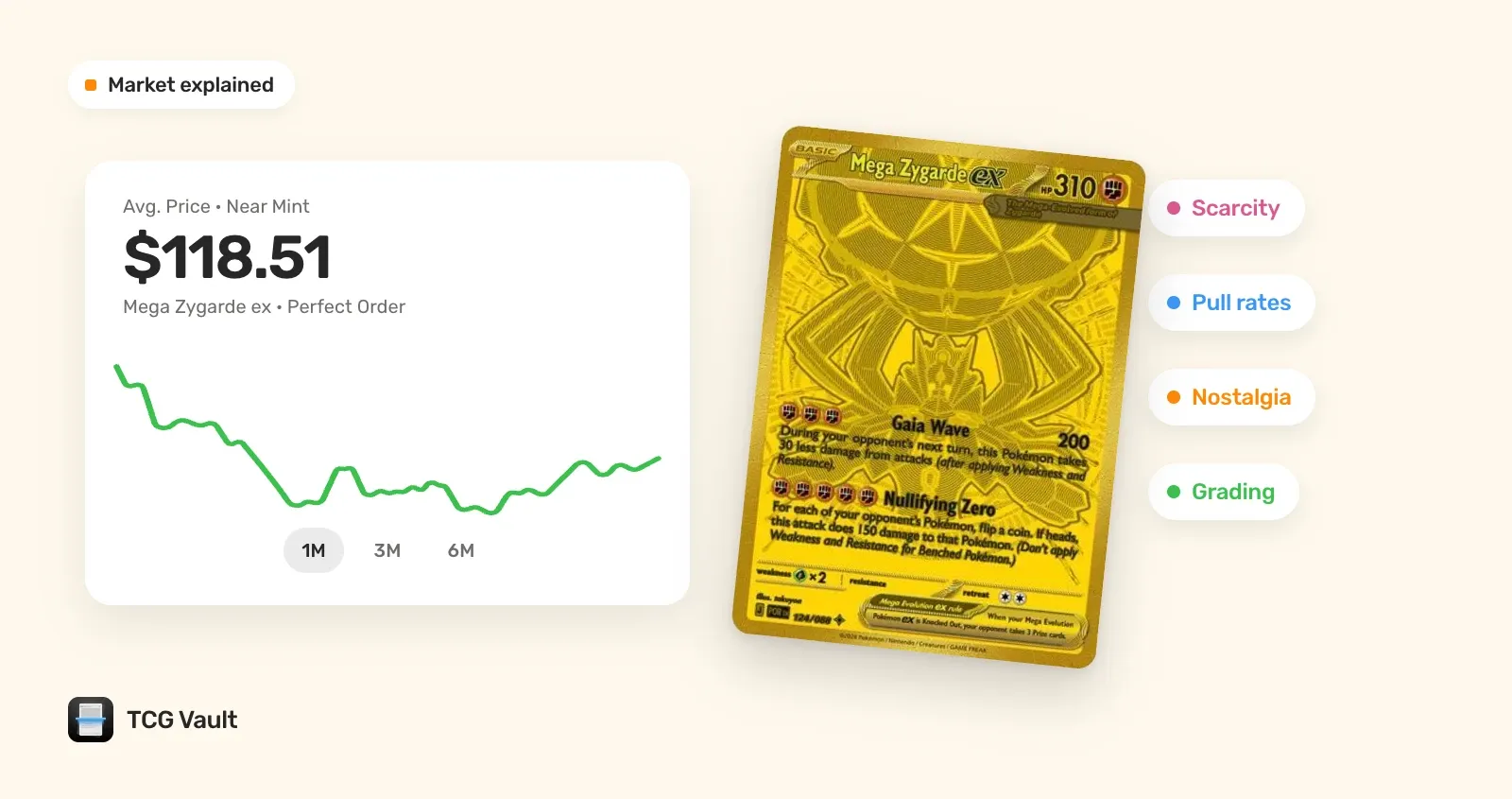
Why are Pokémon cards so expensive? It depends which cards you mean. Most individual cards are cheap: 78.7% of card versions from the Scarlet & Violet and Mega Evolution sets sell for under $1. What’s expensive is the thin top layer, the chase cards that everyone wants, plus sealed product that’s hard to find at retail.
Here are the seven reasons behind those prices, with data from the TCG Vault database (TCGplayer market prices for Near Mint cards, September 19, 2026) and statements from The Pokémon Company itself.
Why are Pokémon cards so expensive right now?
Seven forces explain almost every high price in the hobby. Here they are at a glance, each with an example from our data or from The Pokémon Company:
| Reason | What it means | Example |
|---|---|---|
| 1. Demand has outrun printing | New product sells out despite huge print runs | About 10 billion cards printed in a year, and still shortages |
| 2. Chase cards are rare | Few top-rarity cards per set | 7 of Perfect Order’s 124 cards are SIRs or a Mega Hyper Rare |
| 3. Fan favorites | A few Pokémon carry huge premiums | Median SIR: $315.57 for favorites, $30.76 for the rest |
| 4. Art | Full-scene illustration cards command more | Illustration Rare median $12.16 vs $0.80 for a regular ex |
| 5. Condition and grading | Top condition is scarce and grading costs money | PSA’s cheapest open tier: $59.99 per card |
| 6. Age | Older cards are scarcer | Median 1999–2003 card: $13.90; Scarlet & Violet: $0.24 |
| 7. Resale | Sold-out product gets resold above retail | The Pokémon Company says it reprints sold-out products |
Reason 1: Demand has outrun printing
The Pokémon Company has said so directly. In a statement on its support site, it acknowledged that fans were “experiencing difficulties purchasing certain Pokémon Trading Card Game (TCG) products due to very high demand,” and said it was printing more “as quickly as possible and at maximum capacity.” For new expansions, it said it was “maximizing production,” and Pokémon Center uses a virtual queue for certain products when traffic spikes.
The scale is enormous. The company’s official figures show more than 85 billion cards produced by the end of March 2026. Kotaku, comparing that with the company’s earlier figure of 75 billion as of May 2025, reported that about 10 billion cards were printed in a single year. Even so, popular products still sell out.
When product is scarce at retail, prices rise everywhere else, and sealed boxes resell above their original price.
Reason 2: The cards people want are the rarest in each set
Modern sets are built around a handful of chase cards. Perfect Order, for example, has 124 numbered cards, of which just 6 are Special Illustration Rares and 1 is a Mega Hyper Rare. Rarer cards turn up less often in packs, so there are fewer copies to go around, and their prices reflect it.
Here’s what that looks like across all 22 Scarlet & Violet and Mega Evolution sets:
| Rarity | Median market price |
|---|---|
| Common | $0.19 |
| Rare | $0.25 |
| Double Rare (regular ex cards) | $0.80 |
| Ultra Rare (full-art ex and Trainers) | $2.22 |
| Illustration Rare | $12.16 |
| Special Illustration Rare | $34.88 |
| Mega Hyper Rare | $207.04 |
| Black White Rare (4 cards) | $592.58 |
From Common to Mega Hyper Rare, the median price rises about a thousandfold.
Reason 3: Fan-favorite Pokémon carry a huge premium
Rarity sets a floor; the Pokémon on the card sets the ceiling. Among the 222 Special Illustration Rares in recent sets, the 23 featuring long-time fan favorites (Pikachu, Charizard, Umbreon and the other Eeveelutions, Gengar, Mew, Mewtwo, Rayquaza, Lugia, Greninja and Dragonite) have a median price of $315.57. The other 199 have a median of $30.76.
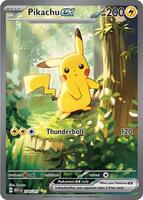
That’s the same rarity at roughly ten times the price. Demand for a few characters is simply that much stronger. The most expensive card from a 2026 set in our database is a Pikachu, the Pikachu ex Special Illustration Rare from Ascended Heroes, at $954.38.
Reason 4: Collectors are paying for art
Look at the rarity table again. At the median, an Illustration Rare, with its full-scene artwork, is worth about fifteen times as much as a regular ex card ($12.16 against $0.80). Even full-art Ultra Rares sit at just a $2.22 median.
Collectors buy these cards as small pieces of art. Many of the most valuable modern cards are alternate-art versions, like the Umbreon VMAX alternate art from Evolving Skies ($2,283.14) and the Gengar & Mimikyu GX alternate full art from Team Up ($1,876.03).
Reason 5: Top condition is scarce, and grading costs money
Every price in this article is for a Near Mint card. Cards that are both Near Mint and perfectly centered are scarcer still, and buyers who want a top grade pay for it.
A good grade on its own isn’t rare: PSA says about 90% of the modern trading card game cards it has graded since 2018 came back PSA 8 or higher. What collectors compete for are the copies at the very top of the scale, and the fees and risk of getting there are priced into every graded chase card.
Grading adds its own costs. As of mid-September 2026, PSA’s cheapest open tier was $59.99 per card (its Value tiers were paused), CGC started at $17 per card for 25 or more cards, and Beckett at $17.95. Add shipping, insurance and months of waiting, and those costs become part of what a graded card sells for. Our PSA grading cost calculator shows how quickly they add up.
Reason 6: Older cards are scarcer
Older cards command higher prices, and our data shows it clearly. The median card from Wizards of the Coast-era expansions (1999–2003) sells for $13.90, against $0.24 for Scarlet & Violet.
Production has also exploded. If about 10 billion of the 85 billion cards ever made were printed in the year to March 2026, then more than one in nine Pokémon cards in existence is less than two years old. Early cards were printed when the hobby was far smaller.
Print run matters within vintage too. The Base Set Charizard sells for $882.02 in its regular unlimited printing, $2,257.87 as a shadowless copy and $10,000 with a 1st Edition stamp.
Reason 7: Sold-out product gets resold
When a popular set sells out in stores, collectors who missed it buy from resellers, and the price of sealed product on the secondary market rises above what stores charged. The Pokémon Company says it will “continue to reprint impacted products to replenish stock,” including at Pokémon Center, so shortages of a particular product don’t always last.
If you want sealed product, it can pay to wait for a reprint rather than buy at the peak.
Are Pokémon cards actually expensive?
Mostly, no. The median card version from recent sets sells for $0.24, and half of all English card versions sell for under $1. Our guide to whether Pokémon cards are worth anything breaks those numbers down.
The expensive part of the hobby is concentrated: chase rarities of popular Pokémon, graded cards in top condition and vintage cards from the first few years. If you collect for fun, you can avoid most of it by buying the specific singles you want rather than chasing them in packs. To see which cards sit at the top right now, browse our list of the most expensive Pokémon cards, or look any card up in our Pokémon card value checker.
Will Pokémon card prices go down?
Nobody can promise either way, and nothing here is financial advice. Two forces pull in different directions. The Pokémon Company says it is maximizing production and reprinting products that sell out, which can ease the pressure on sealed product over time. Demand for individual chase cards, on the other hand, depends on how many collectors want them, and that’s much harder to predict.
What you can do is price every purchase against recent sales. TCG Vault scans a card and shows its current TCGplayer market price in seconds, so you don’t have to guess whether a price is fair.
Frequently asked questions
Why is Charizard so expensive?

Charizard has been a collector favorite since the first set, and its cards carry that premium. In our data, the 1999 Base Set Charizard is $882.02 unlimited and $10,000 as a 1st Edition, and the Charizard ex Special Illustration Rare from Scarlet & Violet 151 is $362.20.
Why are Umbreon cards so expensive?
Umbreon is one of the most sought-after Pokémon in recent sets. The Umbreon VMAX alternate art from Evolving Skies is at $2,283.14 and the Prismatic Evolutions Umbreon ex Special Illustration Rare at $1,410.28; even its Master Ball pattern rare is $77.83.
Why are Pokémon booster boxes so expensive?
When a set is in high demand, retail stock sells out and boxes change hands on the secondary market above the original price. The Pokémon Company says it reprints products that sell out, which can make them easier to find again.
Are Pokémon cards a good investment?
Nothing here is financial advice. Some cards have risen in value and many haven't, so buy cards you'd be happy to own even if their price falls.
Keep reading
-
What Size Are Pokémon Cards? Card, Sleeve and Holder Sizes
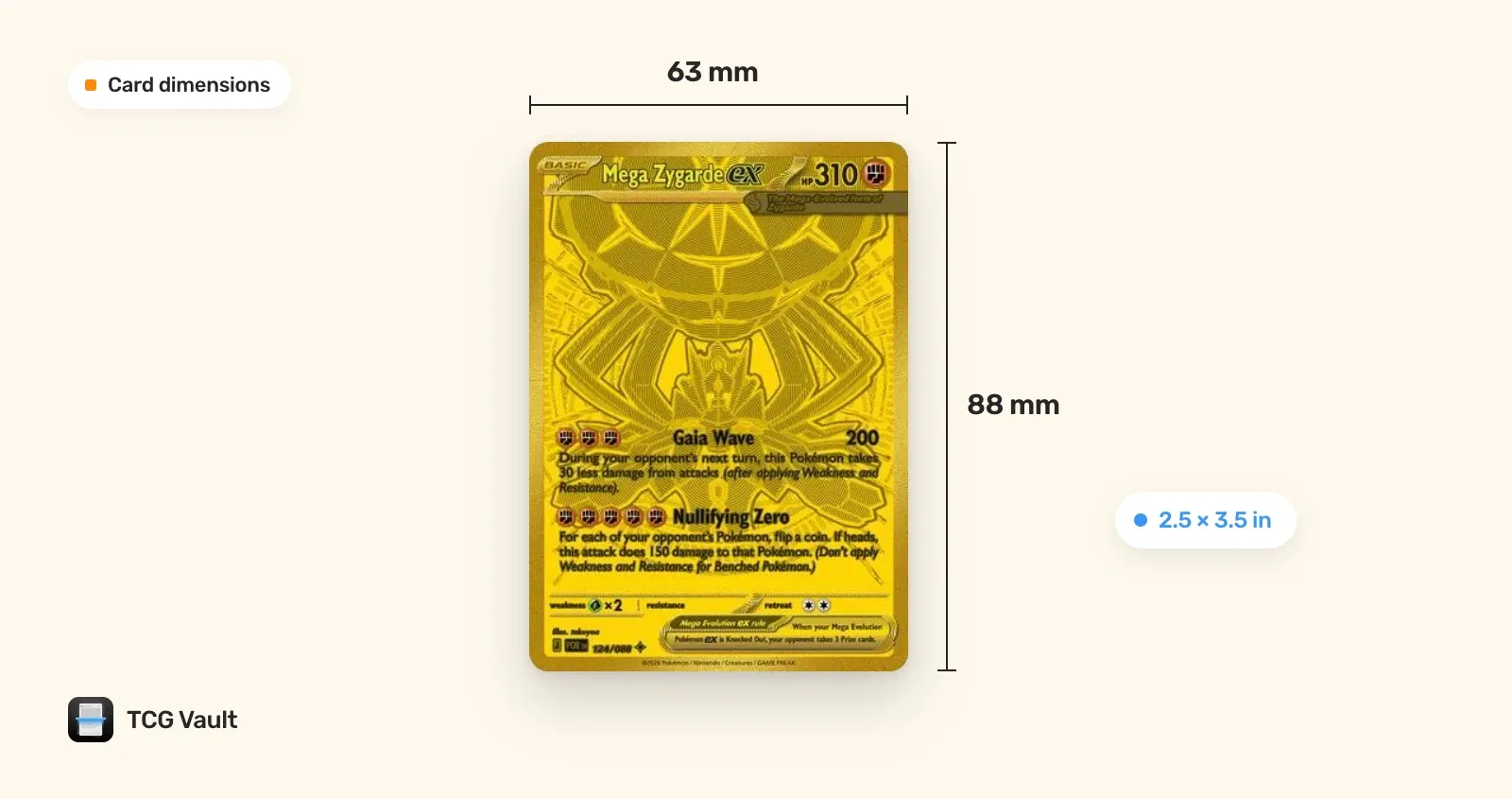
Pokémon cards are 2.5 x 3.5 inches (63 x 88 mm), the same as Magic cards. Which sleeves, top loaders and holders fit them, and why Yu-Gi-Oh! sleeves don't.
-
How to Organize Pokémon Cards: Binders, Boxes and Sorting
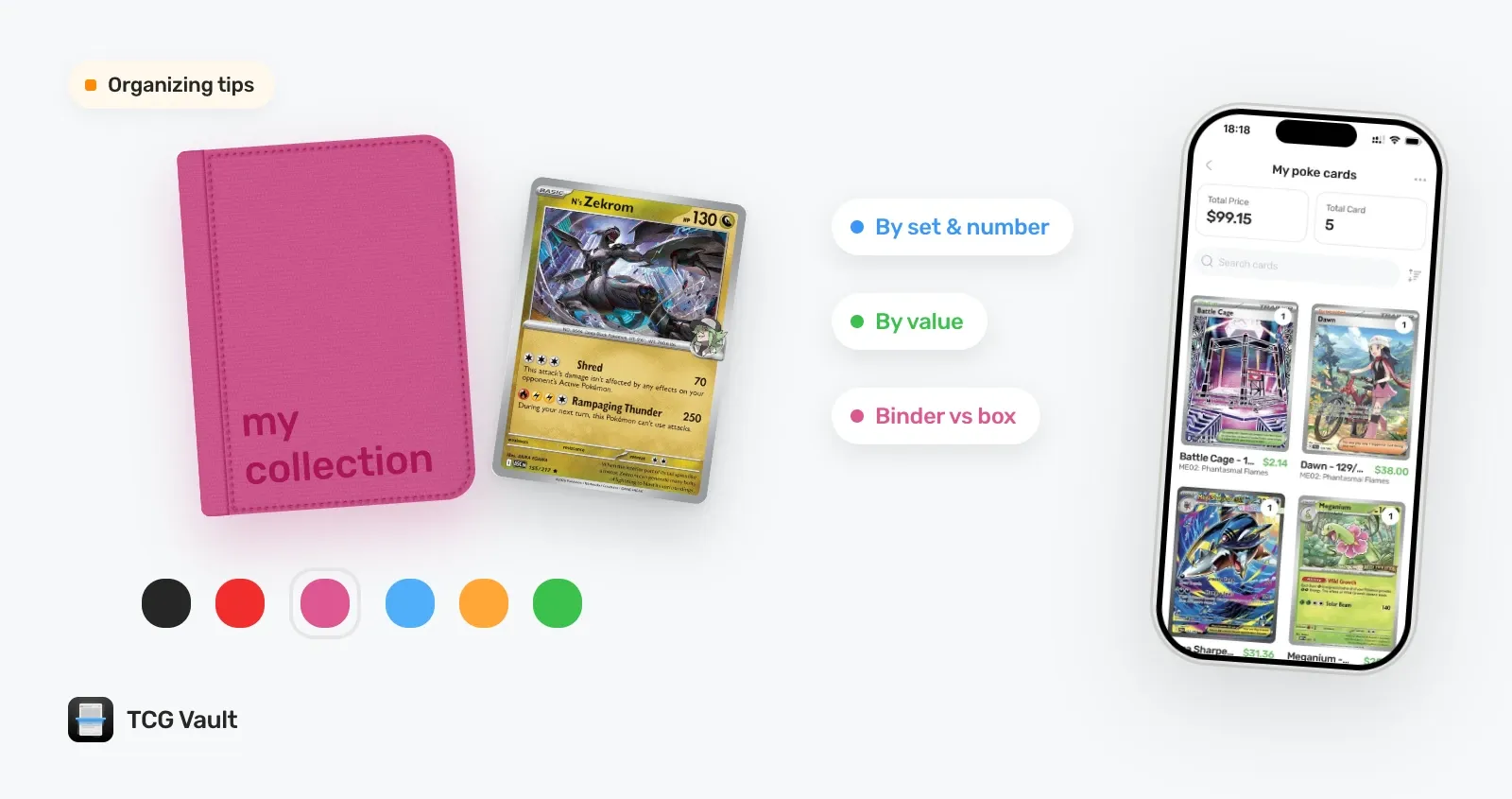
Sort by set and number, keep your best cards in sleeves and binders, store bulk in labeled boxes and track it all in an app. A simple system that scales.



See what your cards are really worth.
Scan a card with your phone and TCG Vault shows its market price in seconds — then keeps your whole collection’s value up to date.
 Download on iOS
4.5★ from 107 App Store ratings
Still choosing? See 9 card scanner apps compared →