

How to Organize Pokémon Cards: Binders, Boxes and Sorting
By TCG Vault Team · · 6 min read
Written by the team that builds TCG Vault — how we research these guides.
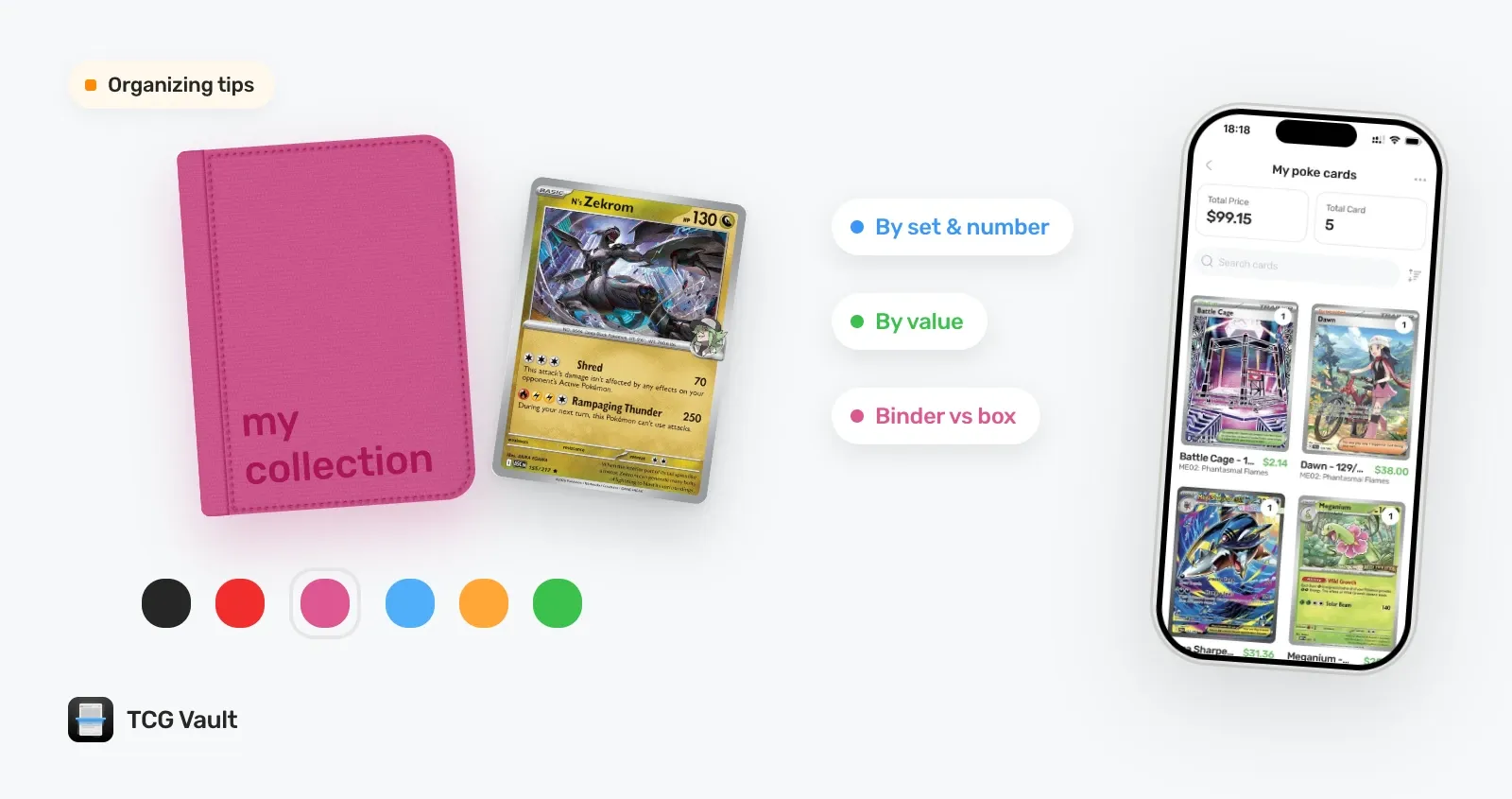
Knowing how to organize Pokémon cards matters more the bigger your collection gets. A shoebox of loose cards makes it hard to find what you own, easy to damage the good ones and nearly impossible to know what the whole pile is worth. The good news is that one simple system works for 100 cards and for 10,000.
This guide walks through that system: sorting, binders, boxes, protecting your best cards and tracking everything digitally, plus how many binder pages recent sets need.
Step 1: Sort your Pokémon cards into piles
Before you decide on binders or boxes, do a first pass and split everything into piles:
- Possibly valuable: Illustration Rares, Special Illustration Rares, gold cards, older holos and anything you’re unsure about. Our guide to Pokémon card rarity symbols explains what each symbol means.
- Binder cards: holos, full-art cards and favorites you want to see.
- Bulk: commons, uncommons and regular rares.
- Energy and code cards: basic Energy and the online code cards from packs.
- Damaged: creased or bent cards, kept separate so they don’t get mixed in with good copies.
Expect the bulk pile to be the biggest by far. In the five main Mega Evolution-era sets, 71% of cards had a Near Mint TCGplayer market price under $1 in our database in September 2026. Most of a collection’s value sits in a small number of cards, which is why pulling those out first matters.
Best ways to sort Pokémon cards
Once the piles are made, pick one sorting method and stick to it. Here’s how the common options compare:
| Sort by | Best for | Downside |
|---|---|---|
| Set, then collector number | Completing sets, finding any card fast | Your favorite Pokémon end up scattered across sets |
| Pokédex number | Collecting every Pokémon, or one favorite | Trainer and Energy cards need their own section |
| Type (Fire, Water, Psychic…) | Building decks, colorful binders | Hard to find a specific card in a big collection |
| Rarity | Showing off your best pulls | Rarity doesn’t equal value |
| Value | Knowing what to protect and insure | Prices change daily, so the order goes stale |
For most collectors, set and collector number is the backbone. Cards in a set are numbered at the bottom (such as 025/165), so there’s never a question where a card goes, and gaps show you exactly what’s missing. You can still keep a separate binder for a favorite Pokémon on top of that.
How to organize Pokémon cards in a binder
Binders are for the cards you want to look at. A few rules keep them useful:
- Use 9-pocket pages. Each side holds nine standard-size cards, one card per pocket.
- Prefer side-loading pockets. Ultra Pro, for example, makes side-loading pages designed so cards are less likely to fall out.
- Give each set its own binder or section, in collector number order, and leave empty pockets for cards you don’t have yet. The gaps become your checklist.
- Don’t overfill. Stick to one card per pocket, and choose a binder with a page count that fits the set.
Here’s how many 9-pocket pages a full set takes if you use both sides of each page (18 cards per page) or only the front (9 per page). Set sizes are the total card counts, including the secret rares numbered above the printed set size:
| Set | Cards in set | Pages, both sides | Pages, front only |
|---|---|---|---|
| 151 | 207 | 12 | 23 |
| Mega Evolution | 188 | 11 | 21 |
| Phantasmal Flames | 130 | 8 | 15 |
| Perfect Order | 124 | 7 | 14 |
| Chaos Rising | 122 | 7 | 14 |
| Pitch Black | 120 | 7 | 14 |
For scale, Ultra Pro’s 20-page zippered Pikachu binder holds up to 360 sleeved cards, enough for any one of these sets with room to spare.
Where do promos and Japanese cards go?
Give both their own section. Promo cards aren’t part of a numbered set; modern ones are numbered within their promo series, such as SVP 001 or MEP 001, so sort them by that number. Japanese cards use different set names and numbers from their English versions, so mixing them into an English set binder breaks the numbering.
How to store bulk Pokémon cards
Bulk belongs in cardboard storage boxes, not binders. Keep cards standing upright, and use divider cards between sets so a box works like a filing cabinet. Label the outside of each box with the sets inside.
Box sizes are sold by “count,” and Pokémon cards fit more than the label suggests. BCW’s 800-count box holds about 1,140 collectible gaming cards like Pokémon, and its 3200-count box holds about 4,800, because the counts are based on thicker standard trading cards.
Skip rubber bands, which can dent card edges, and keep boxes somewhere cool and dry, away from direct sunlight.
How to protect your most valuable Pokémon cards
Anything from your “possibly valuable” pile that turns out to be worth real money deserves better than a binder pocket:
- Penny sleeve plus top loader: a common choice for valuable singles. The sleeve protects the surface, and the 3 x 4 inch top loader keeps the card from bending.
- Magnetic holder: a two-piece display case for your best cards.
- Semi-rigid holder: mainly for cards you’re sending to be graded, since PSA requires them for submissions.
Our guide to what size Pokémon cards are lists which sleeves and holders fit.
How to track your Pokémon collection digitally
A physical system tells you where a card is. A digital list tells you what you own and what it’s worth.
TCG Vault makes this quick. Scan a card with your iPhone camera and the app identifies it and shows its current TCGplayer market price. Add it to a collection, set how many copies you have, and the collection keeps a running total value that updates as prices change. You can show values in more than 30 currencies.
A few ways to use it alongside your binders and boxes:
- Mirror your physical system. One collection for your main binder is free; with the premium subscription you can create more, such as one per binder or one for trade cards.
- Watch the valuable pile. Premium price history charts show how a card moved over the past one, three and six months, which helps you spot cards that have climbed enough to need a top loader.
- Check before you trade. The Pokémon card value checker looks up any card’s current price, even ones you don’t own yet.
A spreadsheet works too, if you’re happy typing set names and numbers by hand.
A simple routine to keep it organized
A system only works if new cards go into it. After every pack opening or trade:
- Sort the new cards into the same piles as before.
- File binder cards by set and number, and bulk into the right box section.
- Scan anything that might be valuable, and add it to your collection.
- Every month or two, re-check your most valuable cards and move any that have risen in price into better protection.
It takes a few minutes each time, and it saves you the weekend-long reorganization later.
Frequently asked questions
What should I do with bulk Pokémon cards?

Check bulk for valuable cards before you trade, donate or sell it as a lot. A quick scan catches the occasional card that's worth far more than the rest.
Where should I keep basic Energy cards?
In their own box or section, sorted by type. They rarely matter for value, and keeping them out of your set boxes makes the rest of the collection easier to browse.
How should I handle duplicate cards?
Keep the best-condition copy in your binder and put duplicates in the set's section of a storage box, or in a trade binder if you plan to trade them.
Should I keep cards for trading separate?
Yes. A dedicated trade binder or box keeps you from trading away a card from your main collection by mistake, and makes it easy to show what's available.
Keep reading
-
What Size Are Pokémon Cards? Card, Sleeve and Holder Sizes
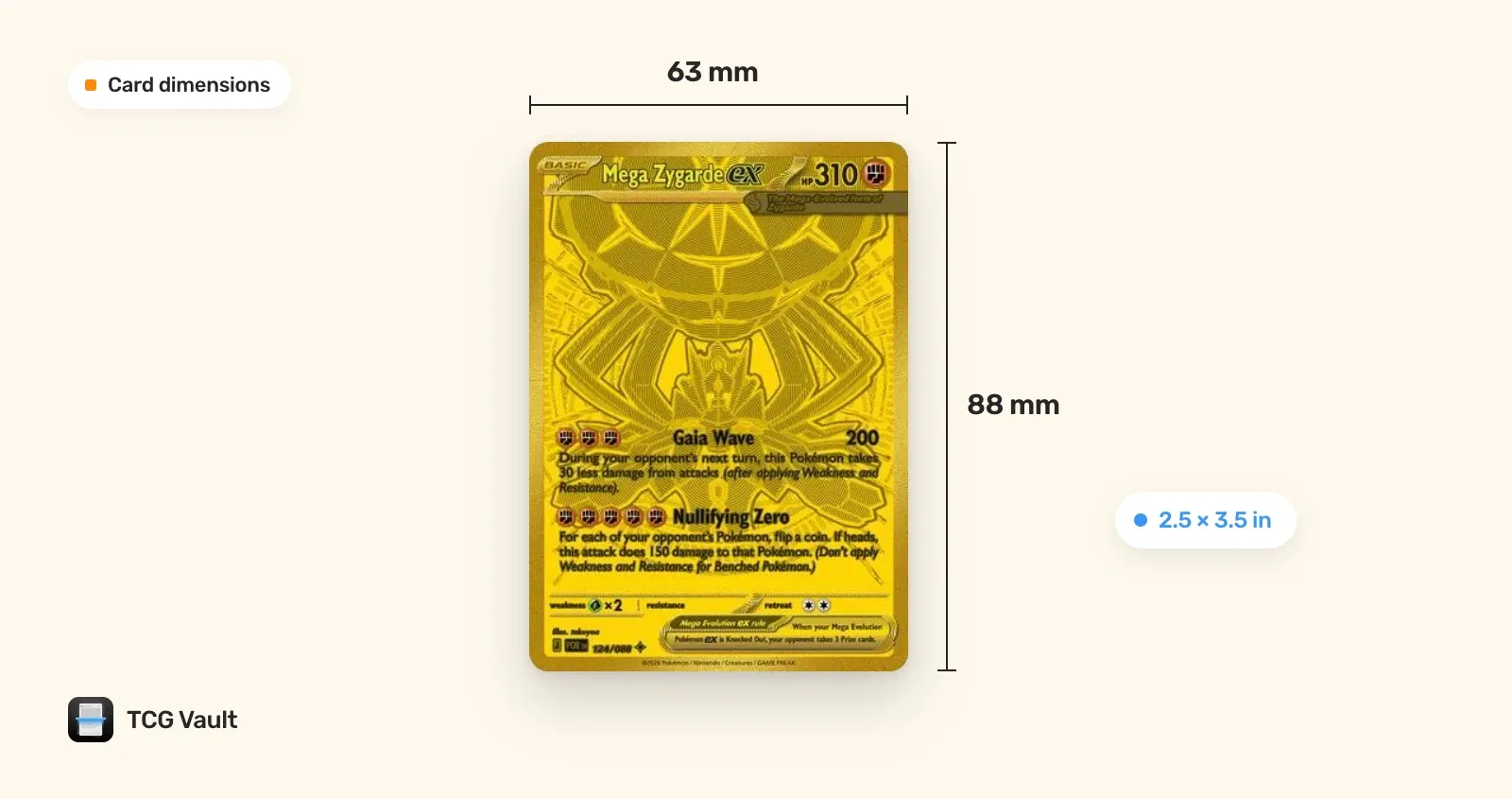
Pokémon cards are 2.5 x 3.5 inches (63 x 88 mm), the same as Magic cards. Which sleeves, top loaders and holders fit them, and why Yu-Gi-Oh! sleeves don't.
-
Magic: The Gathering Cards Worth Money
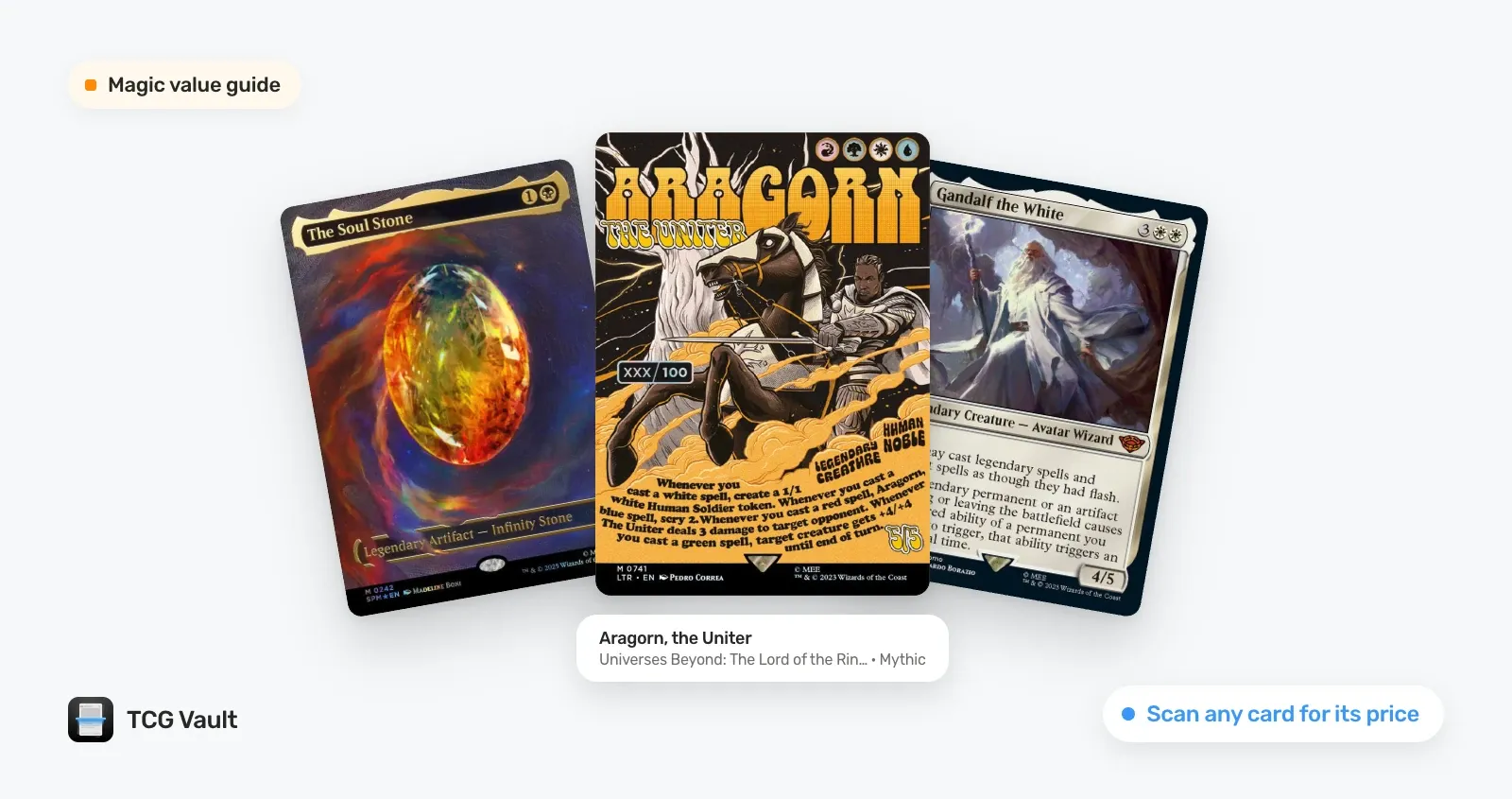
Only about 1% of Magic cards sell for $100 or more. Which ones, what the Reserved List really protects, and current prices for classic and modern cards.



See what your cards are really worth.
Scan a card with your phone and TCG Vault shows its market price in seconds — then keeps your whole collection’s value up to date.
 Download on iOS
4.5★ from 107 App Store ratings
Still choosing? See 9 card scanner apps compared →